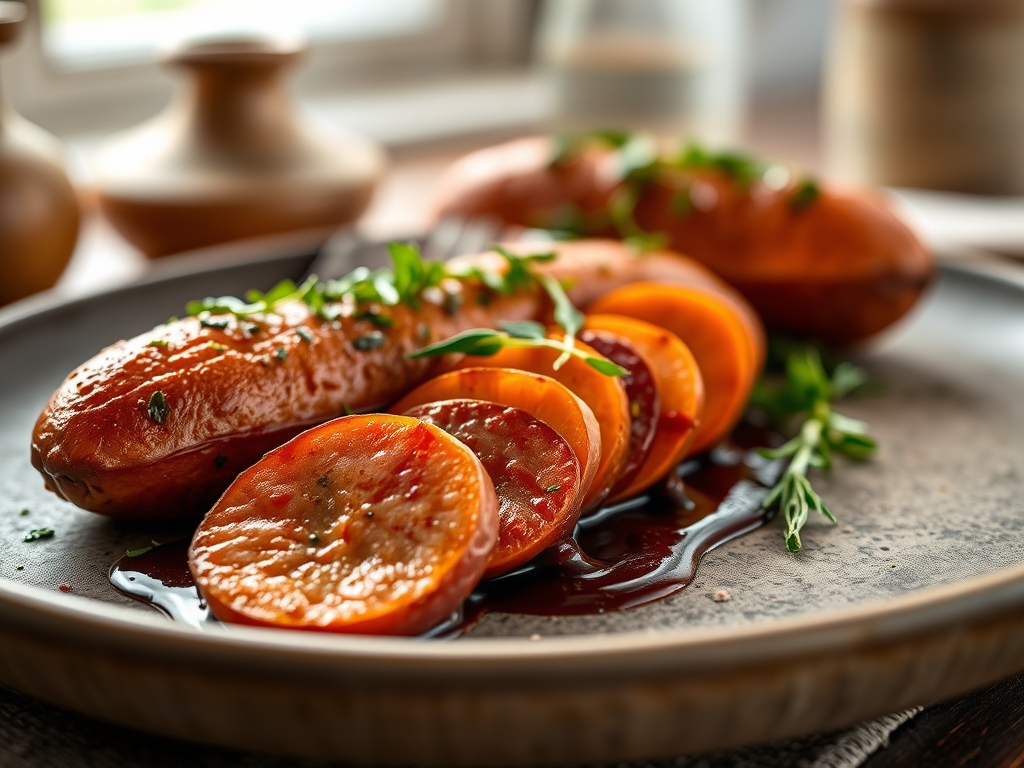
Imagine the scent of hardwood smoke mingling with the caramelizing sugars of a garnet yam. It is a Tuesday night, but your kitchen smells like a high-end smokehouse. We are talking about the ultimate weeknight alchemy: kielbasa sweet potato recipes. This pairing works because it strikes a perfect chord between savory fat and complex carbohydrates. When that snappy, garlic-forward sausage hits a hot pan, it releases rendered fat that acts as a flavor vehicle for the vegetables. The result is a sheet pan symphony that is salty, sweet, and deeply satisfying. Whether you are a meal prep devotee or a hungry professional, these recipes are the holy grail of efficiency. We are moving beyond basic roasting; we are engineering texture. By the end of this guide, you will understand how to manipulate heat to turn a humble tuber into a candy-like delight while keeping your protein succulent. Grab your favorite heavy-bottomed skillet and a sharp chef's knife. We are diving into the science of the perfect roast.
The Gathers:
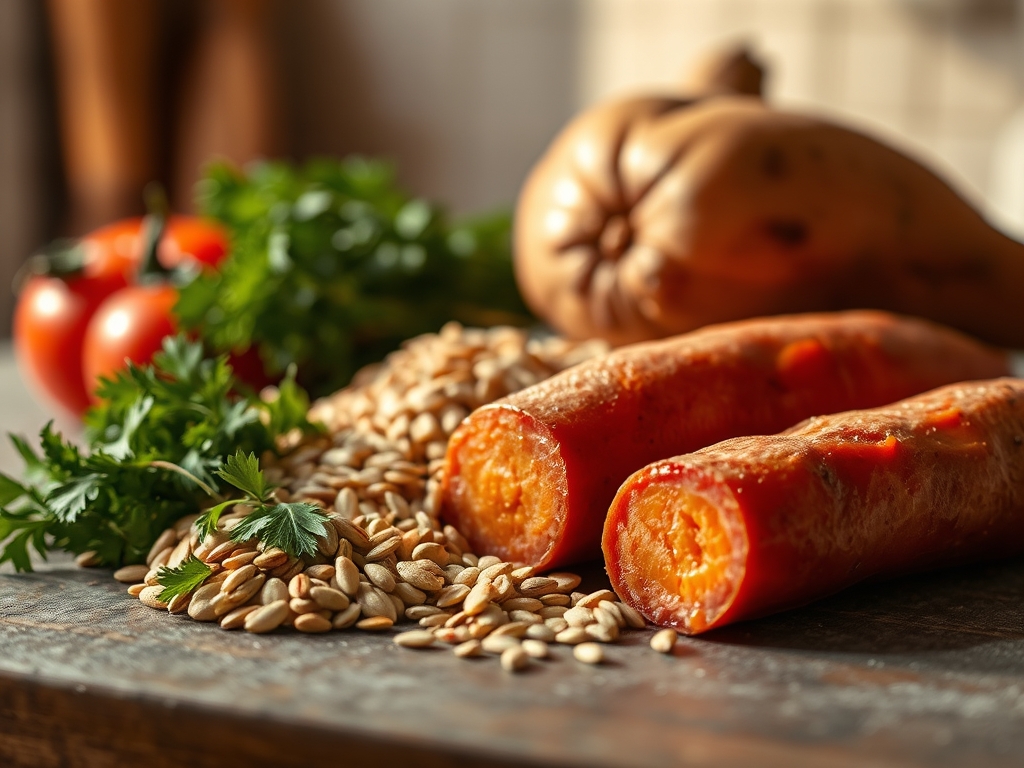
To execute elite kielbasa sweet potato recipes, your mise-en-place must be precise. Start with a high-quality U-shaped kielbasa. Look for one with a natural casing to ensure that signature "snap" upon the first bite. For the potatoes, I recommend Jewel or Garnet varieties for their high moisture content and vibrant color. You will also need a viscous fat source like avocado oil or clarified butter; these have high smoke points that prevent acrid flavors during high-heat roasting.
Your aromatics are equally vital. Fresh rosemary and thyme provide earthy notes that cut through the richness of the pork. For a piquant kick, keep a jar of Dijon mustard or red pepper flakes nearby. Smart Substitutions: If you are avoiding pork, a turkey kielbasa offers a leaner profile but requires a touch more oil to prevent drying. Swap sweet potatoes for butternut squash if you want a lower glycemic index, though the roasting time will fluctuate slightly due to the squash's higher water density. Always use a digital scale to weigh your produce for consistent cooking times.
The Clock:
Efficiency in the kitchen is about mastering the "Chef's Flow." For most kielbasa sweet potato recipes, your total active time is roughly 15 minutes. The oven does the heavy lifting for the remaining 25 to 30 minutes.
Prep (15 mins): This involves peeling, dicing, and slicing. Use a bench scraper to move your ingredients from the cutting board to the pan without bruising the produce.
Roast (30 mins): The first 20 minutes focus on softening the starch. The final 10 minutes are dedicated to the Maillard reaction, where the sugars and proteins brown to create flavor.
Rest (5 mins): Never skip this. Allowing the roast to sit for five minutes ensures the internal moisture redistributes, preventing the sausage from becoming rubbery.
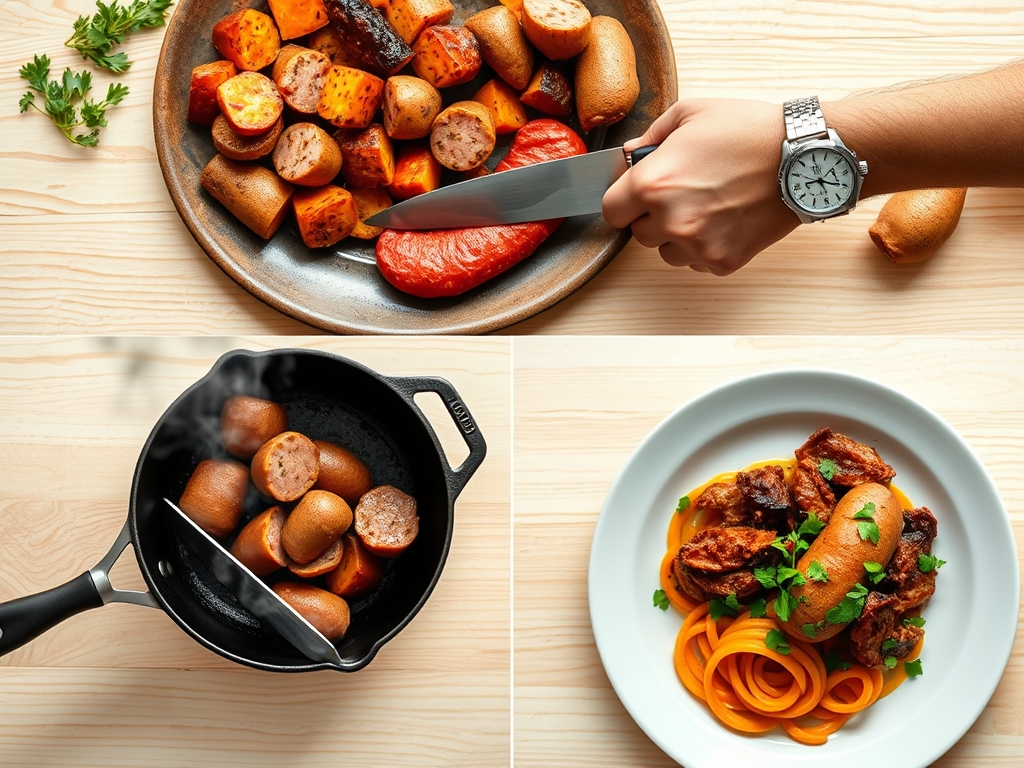
The Masterclass:
1. The Precision Dice
Uniformity is the secret to professional results. Use your chef's knife to cut the sweet potatoes into 1-inch cubes. If the pieces vary in size, the small ones will carbonize before the large ones soften.
Pro Tip: This prevents enzymatic browning. If you prep the potatoes ahead of time, submerge them in cold water to stop oxygen from reacting with the starch, but dry them thoroughly before roasting to ensure they crisp.
2. The Sausage Slice
Slice the kielbasa on a bias (at an angle). This increases the surface area of the meat, allowing more of the fat to render out and coat the potatoes.
Pro Tip: Increasing the surface area accelerates the Maillard reaction, creating more of those savory, browned bits that contain the highest concentration of umami.
3. The Oil Emulsion
In a large bowl, toss your ingredients with oil and spices before they hit the pan. Use a saucier or a small whisk to blend your oil with maple syrup or mustard first.
Pro Tip: This creates a temporary emulsion that ensures every millimeter of the potato is coated, leading to even heat distribution and a consistent "crunch" factor.
4. The High-Heat Roast
Spread the mixture on a preheated sheet pan. You should hear a sizzle the moment the food touches the metal. Do not overcrowd the pan; if the pieces are touching, they will steam rather than roast.
Pro Tip: Preheating the pan utilizes conductive heat, which immediately begins searing the bottom of the food, locking in moisture while the oven's convection air dries the exterior.
5. The Mid-Point Agitation
Halfway through the cooking time, use tongs or a wide spatula to flip the ingredients. This ensures that the side in contact with the pan does not burn while the top remains pale.
Pro Tip: This movement prevents thermal carryover from overcooking one side of the sausage, maintaining a juicy interior while achieving a crisp casing.
6. The Aromatic Infusion
During the last five minutes, add fresh herbs or a sprinkle of garlic. Adding them too early will cause them to burn and turn bitter.
Pro Tip: Heat helps to infuse the essential oils from the herbs into the rendered fat on the pan, creating a fragrant coating that lingers on the palate.
7. The Final Deglaze
Once out of the oven, a tiny splash of apple cider vinegar or lemon juice over the hot pan can loosen the caramelized bits.
Pro Tip: This light deglaze balances the dish. The acidity cuts through the heavy lipids of the kielbasa, brightening the entire flavor profile.
The Deep Dive:
When we look at the macro nutrition of kielbasa sweet potato recipes, we see a powerhouse of sustained energy. A standard serving provides roughly 25g of protein, 35g of complex carbohydrates, and 18g of healthy fats. It is rich in Vitamin A and potassium, making it an excellent post-workout recovery meal.
Dietary Swaps:
For a Keto version, swap the sweet potatoes for cauliflower florets or radishes. For Vegan diners, use a plant-based smoked sausage and increase the smoked paprika to mimic the depth of real kielbasa. All these recipes are naturally Gluten-Free, provided you check the label on your sausage for hidden fillers.
The Fix-It:
- Soggy Potatoes: This usually happens due to overcrowding. Use two sheet pans instead of one to allow for proper airflow.
- Burnt Garlic: If your garlic turns black, it was likely minced too fine. Use a microplane to create a paste and mix it with the oil to protect it from direct heat.
- Dry Sausage: If the meat is tough, you likely sliced it too thin. Keep slices at least half an inch thick to retain internal juices.
Meal Prep Science:
To maintain "day-one" quality, store the roast in an airtight glass container. When reheating, avoid the microwave if possible. A quick five-minute flash in a 350-degree toaster oven will re-aerate the fats and crisp the edges, whereas a microwave will simply steam the starch and make the sausage rubbery.
The Wrap-Up:
Mastering kielbasa sweet potato recipes is about more than just throwing food on a tray; it is about understanding how fat, sugar, and heat interact. By focusing on the Maillard reaction and ensuring proper pan spacing, you elevate a simple meal into a gourmet experience. This dish is forgiving, flavorful, and incredibly fast. It is the kind of recipe that makes you feel like a kitchen genius without the stress of a thousand dishes. So, get that oven preheated and let the science of roasting work its magic!
The Kitchen Table:
Can I use frozen sweet potatoes for this roast?
Yes, but do not thaw them first. Roast them directly from frozen at a slightly higher temperature to prevent them from becoming mushy. This ensures the exterior crisps before the interior loses its structural integrity.
What is the best way to store leftovers?
Store in an airtight glass container for up to four days. Glass is superior to plastic as it does not retain odors from the garlic and smoke in the kielbasa, keeping the flavors clean for reheating.
Why does my kielbasa sometimes burst in the oven?
This happens when steam builds up inside the casing. To prevent this, slice the sausage before roasting. If roasting whole, prick the casing with a fork to allow steam to escape safely without a blowout.
Can I add other vegetables to this sheet pan?
Absolutely. Bell peppers, red onions, and Brussels sprouts work beautifully. Just ensure they are cut to sizes that match the roasting time of the sweet potatoes to prevent some items from overcooking while others remain raw.