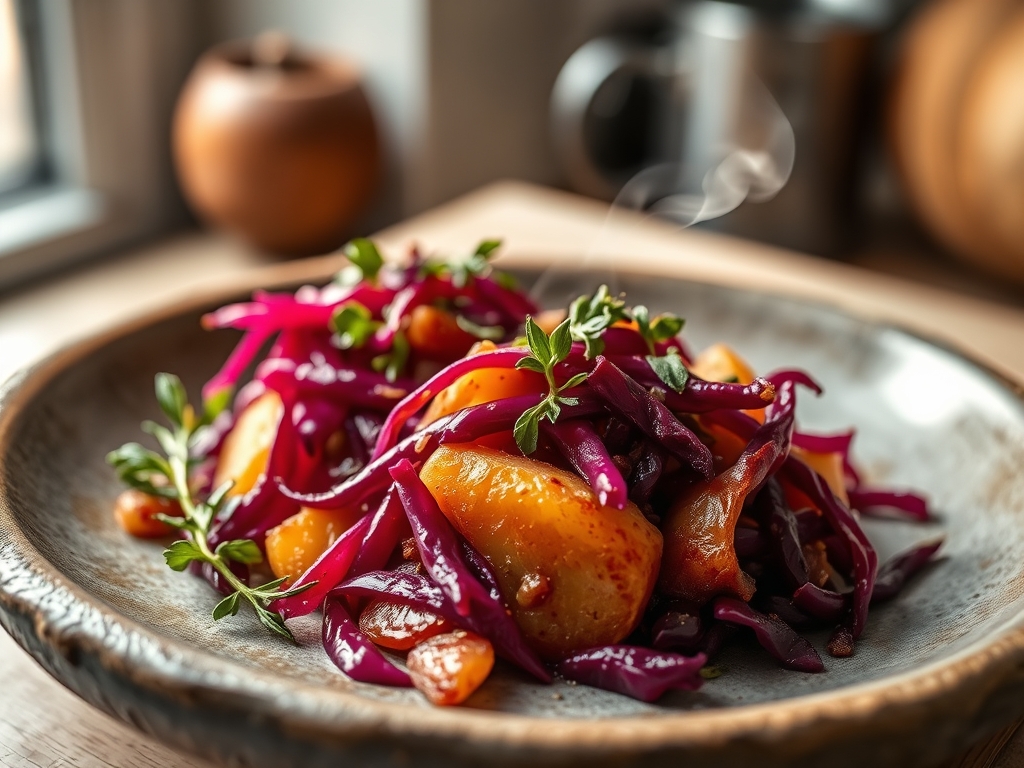
Imagine a kitchen transformed by a vibrant violet haze and the earthy, grounding scent of roasting tubers. We are moving far beyond the beige landscape of standard side dishes. By mastering red cabbage potato recipes, you are not just cooking; you are conducting a symphony of anthocyanins and starches that turn a simple Tuesday night dinner into a visual masterpiece.
The magic happens when the sharp, sulfurous notes of the cabbage meet the creamy, neutral canvas of the potato. It is a balancing act of pH levels and Maillard reactions. Whether you are looking for a silky mash streaked with magenta or a crispy, pan-seared hash that crackles under your fork, these six variations provide the ultimate texture profile. We are going to use heat to break down tough cellulose while preserving that brilliant jewel-tone color. Grab your apron and your sharpest chef knife; we are about to elevate your vegetable game through the lens of culinary science and a little bit of kitchen wit.
The Gathers:
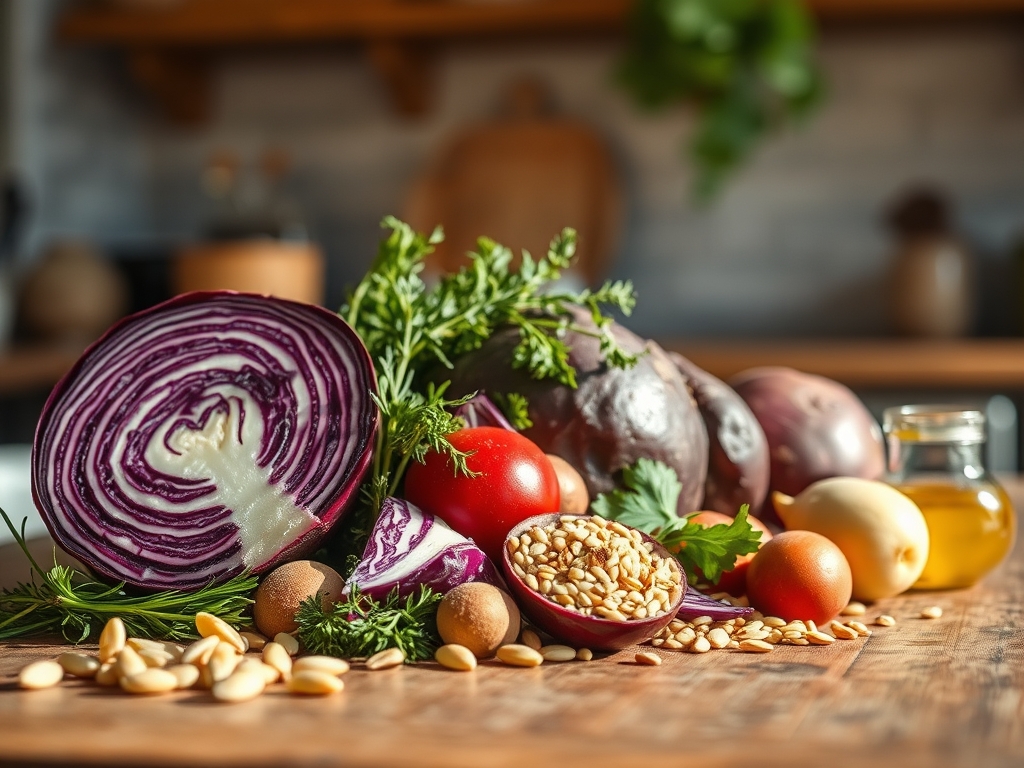
To execute these red cabbage potato recipes with precision, your mise-en-place must be flawless. Start with a firm head of red cabbage; look for tight, heavy leaves which indicate high moisture content. For the potatoes, we alternate between high-starch Russets for fluffiness and waxy Yukon Golds for structural integrity during roasting. You will also need a high-quality acid, like apple cider vinegar or lemon juice, to stabilize the red pigments.
Essential aromatics include shallots for their delicate sweetness and fresh thyme for earthy depth. For the fats, keep a bottle of neutral avocado oil for high-heat searing and unsalted European-style butter for finishing sauces. Smart Substitutions: If you lack red cabbage, radicchio offers a similar color but a more bitter profile. No potatoes? Celery root provides a low-carb alternative with a remarkably similar viscous texture when pureed. Always use a digital scale to measure your ingredients; precision is the secret language of consistent results.
The Clock
Efficiency in the kitchen is all about the Chef's Flow. For these recipes, prep time usually clocks in at 20 minutes, primarily spent on fine julienne cuts and uniform dicing. Cooking times range from 15 minutes for a quick sauté to 45 minutes for a slow-braised confit style.
The trick is to start your potatoes first. Because they are denser, they require more thermal energy to soften the starch granules. While the potatoes simmer or roast, you can focus on the cabbage, which wilts quickly. By syncing these timelines, you ensure both components reach their peak texture simultaneously, preventing the cabbage from becoming mushy while waiting for a stubborn potato to finish its transition.
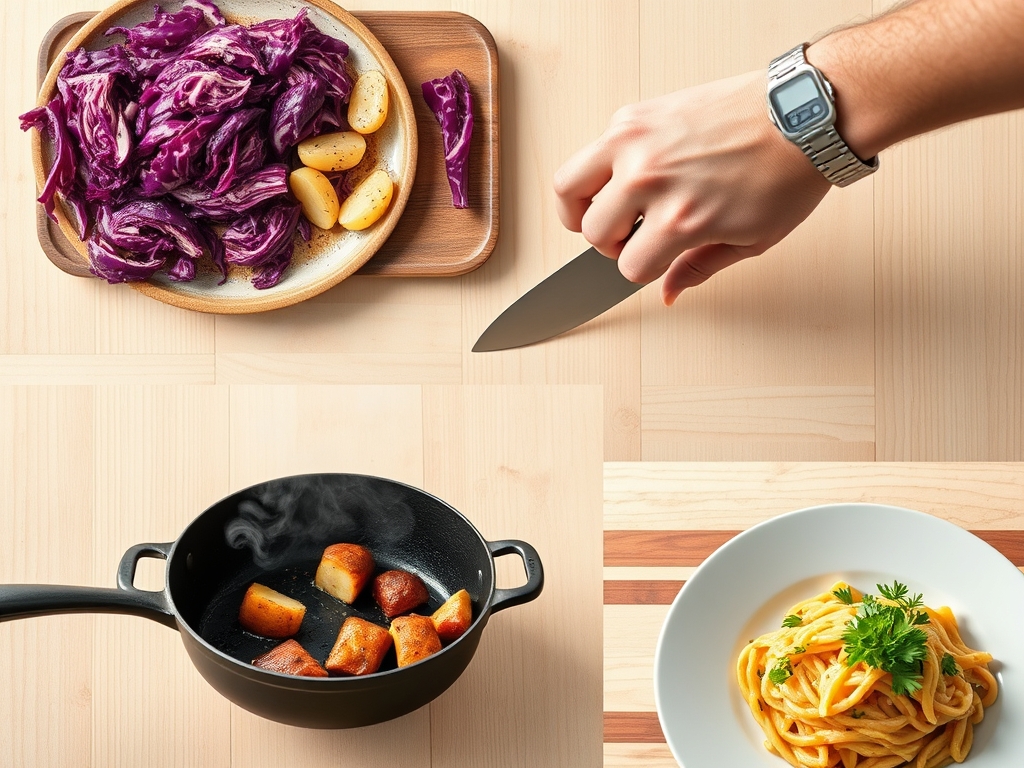
The Masterclass
1. The Precision Prep
Begin by using a sharp mandoline or a steady chef knife to shave the cabbage into paper-thin ribbons. Peel and cube your potatoes into uniform half-inch pieces to ensure even heat distribution.
Pro Tip: This prevents enzymatic browning. By submerging your cut potatoes in cold water immediately, you wash away excess surface starch and stop oxygen from discoloring the flesh; this results in a cleaner, crispier finish during the Maillard phase.
2. The Searing Phase
Heat a heavy-bottomed skillet over medium-high heat. Add your fat and wait for it to shimmer. Toss in the potatoes first, allowing them to develop a golden-brown crust without overcrowding the pan.
Pro Tip: Avoid the urge to stir constantly. Allowing the potatoes to sit undisturbed facilitates the Maillard reaction, a chemical dance between amino acids and reducing sugars that creates hundreds of different flavor compounds and that signature savory "crunch."
3. The Acid Infusion
Once the potatoes are tender, add the shredded cabbage and a splash of vinegar or citrus. The cabbage will immediately begin to soften as the heat breaks down the cellular walls.
Pro Tip: Red cabbage contains anthocyanins, which are pH-sensitive pigments. Without an acid, the cabbage can turn an unappetizing blue or grey. The vinegar acts as a stabilizer, locking in that vibrant fuchsia hue and providing a piquant contrast to the rich potatoes.
4. The Aromatics and Deglazing
Push the vegetables to the side and add minced shallots or garlic to the center of the pan. Once fragrant, use a splash of vegetable stock or white wine to deglaze the bottom of the skillet, scraping up the browned bits (the fond).
Pro Tip: Deglazing utilizes solvent extraction to pull concentrated flavors from the pan surface back into your dish. This step ensures that no flavor is wasted and creates a light, flavorful glaze that coats every morsel.
5. The Emulsification Finish
Turn off the heat and toss in a knob of cold butter or a drizzle of extra virgin olive oil. Stir vigorously until the fat incorporates into the residual moisture from the deglazing liquid.
Pro Tip: This creates a temporary emulsion, giving the dish a luxurious, velvety mouthfeel. The fat also helps to carry fat-soluble flavor compounds from the herbs directly to your taste buds, lengthening the finish of the dish.
6. The Final Aeration
Transfer the mixture to a warm serving bowl and toss gently with fresh herbs using silicone tongs to avoid bruising the delicate cabbage ribbons.
Pro Tip: Use a microplane to zest a bit of fresh lemon over the top at the very last second. The volatile oils in the zest provide an immediate olfactory boost that signals "freshness" to the brain before the first bite is even taken.
The Deep Dive
From a nutritional standpoint, these red cabbage potato recipes are powerhouses. Red cabbage is loaded with Vitamin C and K, while potatoes provide essential potassium and complex carbohydrates for sustained energy. To keep it vegan, swap butter for a rich nut butter or avocado oil. For keto-friendly versions, simply increase the cabbage-to-potato ratio or swap the tubers for roasted cauliflower.
The Fix-It: If your cabbage turned blue, add a teaspoon of lemon juice immediately to restore the pH. If the potatoes are mushy, you likely overcrowded the pan; next time, cook in batches. If the dish tastes flat, it needs more salt or acid to brighten the flavors.
For meal prep, store leftovers in an airtight glass container. To reheat, avoid the microwave, which turns potatoes gummy. Instead, use a saucier or skillet with a tablespoon of water over medium heat to re-steam the vegetables, preserving that "day-one" snap and vibrance.
The Wrap-Up
Mastering the art of red cabbage potato recipes is a fast track to becoming the most sophisticated cook in your friend group. You have learned how to manipulate pH for color, use deglazing for depth, and respect the Maillard reaction for texture. These sides are not just fillers; they are the vibrant, crunchy, and comforting stars of the plate. Now, go forth and turn those humble grocery store staples into a culinary event that looks as good as it tastes.
The Kitchen Table
Can I make these recipes ahead of time?
Yes, but keep the acid separate until reheating. Red cabbage can bleed its color into the potatoes over time. Reheat in a skillet to maintain the texture of the potatoes rather than using a microwave.
Which potato is best for sautéing with cabbage?
Yukon Golds are the gold standard here. They have a medium starch content that allows them to hold their shape while still developing a creamy interior and a crispy exterior during the searing process.
Why did my red cabbage turn a weird blue color?
This is a chemical reaction. Red cabbage contains anthocyanins that turn blue in alkaline environments. Add an acidic component like vinegar, wine, or lemon juice to shift the pH and return the cabbage to red.
How do I get the cabbage really crispy?
The key is high heat and low moisture. Pat the shredded cabbage dry with a paper towel before adding it to a hot, heavy-bottomed skillet. Do not salt the cabbage until the very end of the cooking process.