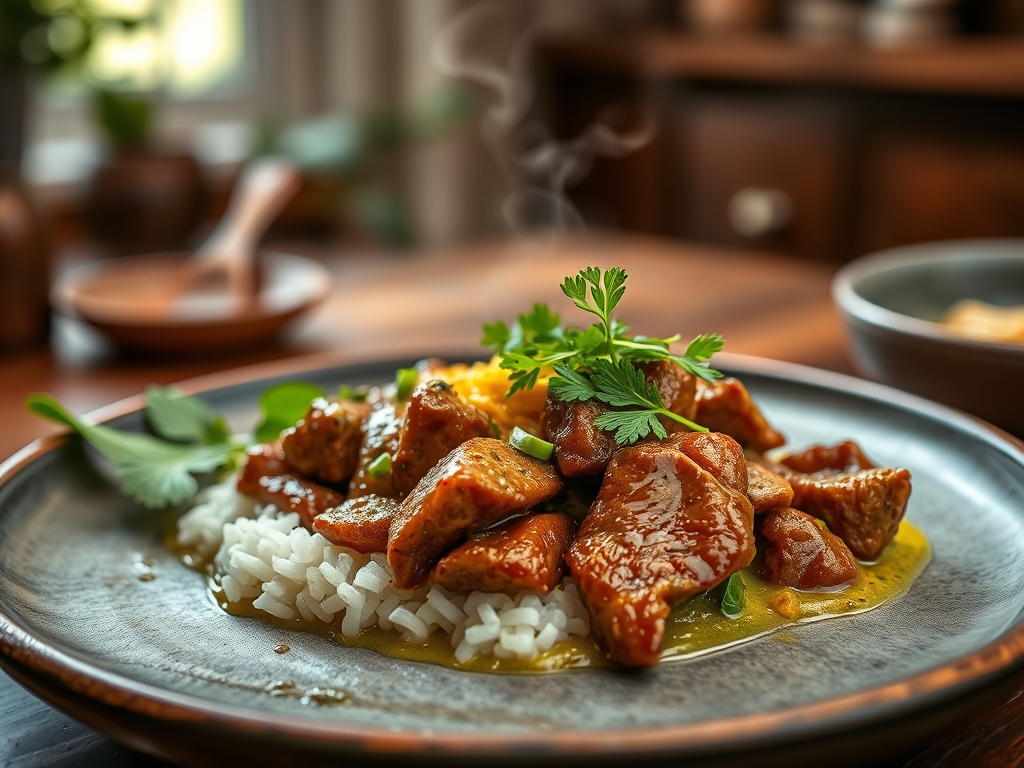
Imagine a kitchen thick with the scent of crushed lemongrass and the sharp, citrusy sting of kaffir lime leaves hitting hot oil. Your search for authentic thai green curry beef recipes usually ends with a watery, pale imitation of the Bangkok street stalls you crave. We are not making a soup today; we are crafting a complex, emulsified masterpiece where the fat carries the heat and the beef melts like butter. This is a dish of high contrast. You have the cooling creaminess of coconut milk fighting against the piquant heat of bird's eye chilies. It is chemistry in a bowl, and once you master the molecular dance of "splitting" your coconut cream, you will never look at a takeout container the same way again. We are going to build layers of flavor that vibrate on the tongue, moving from salty umami to a bright, herbaceous finish. Grab your heaviest skillet and a sharp knife. We are about to transform a humble cut of protein into a vibrant, emerald green obsession that balances heat, sweet, and soul.
The Gathers:
To execute this properly, your mise-en-place must be precise. We are looking for high-fat content and aromatic density. Start with 1.5 pounds of flank steak or chuck roast. If you choose chuck, the connective tissue requires a longer braise to reach the gelatinous stage. For a quick weeknight version, flank steak sliced against the grain is your best friend.
The aromatics are the soul of the dish. You need four tablespoons of high-quality green curry paste. Look for brands that list shrimp paste and galangal near the top of the ingredients. You will also need two cans of full-fat coconut milk; do not even think about the "lite" versions, as they lack the lipid structure to emulsify the paste. Freshness comes from six kaffir lime leaves (bruised to release essential oils), a handful of Thai basil, and two stalks of lemongrass.
Smart Substitutions: If you cannot find galangal, use fresh ginger with a squeeze of lime to mimic that piney, medicinal punch. No palm sugar? Use light brown sugar or maple syrup to provide the necessary glucose for the Maillard reaction. For the vegetable component, Thai eggplants are traditional, but sliced bamboo shoots or even snap peas offer a fantastic textural contrast. Use a digital scale to measure your beef for consistent cooking times and a microplane for any fresh aromatics you want to integrate into the base.
The Clock: Chef's Flow
Timing is the difference between a muddy mess and a vibrant curry. Total prep time is 20 minutes; this includes your knife work and bruising the aromatics. The actual cook time is 25 minutes for a quick-sear method or 60 minutes for a slow braise.
The "Chef's Flow" relies on the sequence of heat. You start by rendering the coconut fat, which takes about 5 to 7 minutes of simmering until the oil separates. This is the foundation. While the beef rests after its initial sear, you infuse the liquid. The final 5 minutes are reserved for the "soft" ingredients like basil and lime leaves, which lose their volatile aromatic compounds if subjected to prolonged high heat.
The Masterclass:
1. The Beef Prep and Sear
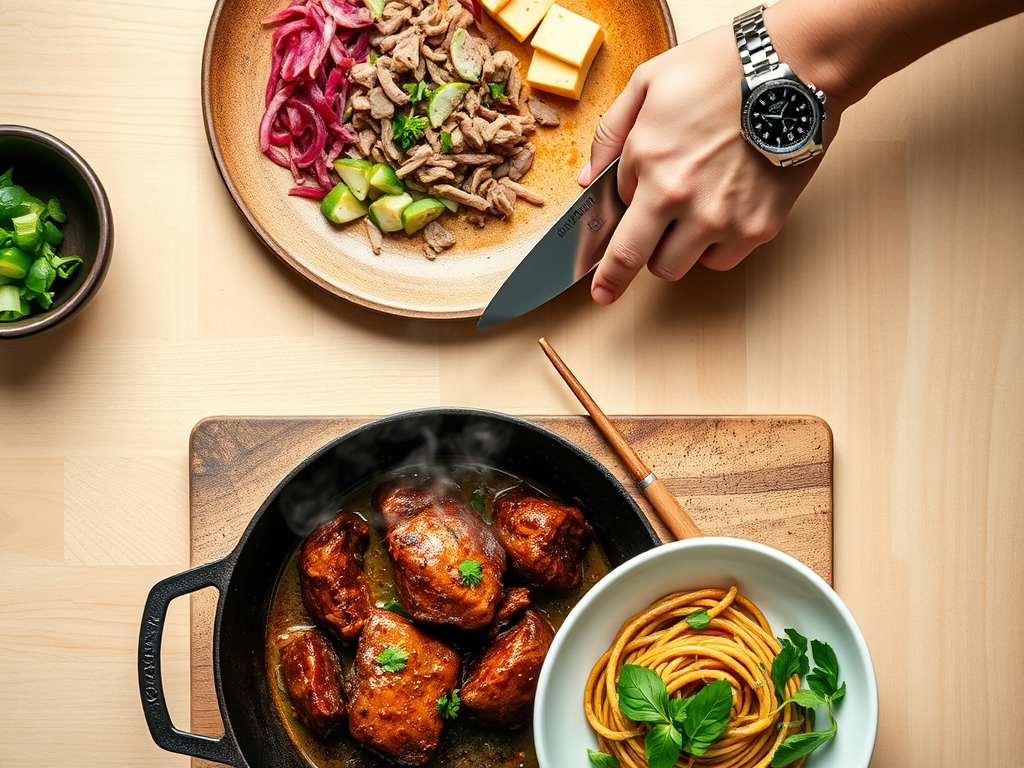
Slice your beef into thin, uniform strips against the grain using a sharp chef's knife. Use a heavy-bottomed skillet or a saucier to sear the beef in small batches over high heat. Do not crowd the pan. You want a hard sear to create a crust.
Pro Tip: This relies on the Maillard reaction, where amino acids and sugars react under high heat to create hundreds of flavor compounds. If the pan is too full, the beef will steam in its own moisture, resulting in a gray, rubbery texture rather than a savory, browned exterior.
2. Splitting the Coconut Cream
Open your can of coconut milk without shaking it. Scoop the thick "cream" from the top into your skillet. Cook it over medium heat until it begins to bubble and the oil starts to separate from the solids.
Pro Tip: This is called breaking the emulsion. By separating the coconut oil, you create a high-temperature medium to fry the curry paste. This "blooms" the fat-soluble spices, intensifying the flavor profile far beyond what simple boiling could achieve.
3. Blooming the Paste
Add your green curry paste to the split coconut oil. Use a silicone spatula to mash and stir the paste for 2 to 3 minutes until it becomes incredibly fragrant and turns a shade darker.
Pro Tip: Heat causes aromatic volatilization. By frying the paste, you are releasing the essential oils in the lemongrass, chilies, and coriander seeds, ensuring the flavor permeates the entire dish rather than just sitting on top.
4. The Infusion Phase
Gradually stir in the remaining coconut milk and a splash of beef stock. Add your bruised lemongrass and kaffir lime leaves. Bring to a gentle simmer, never a rolling boil.
Pro Tip: Gentle heat prevents the denaturation of the coconut proteins. If you boil the sauce too vigorously, the fats and proteins can separate permanently, resulting in a curdled, grainy sauce instead of a silky, viscous coating.
5. The Protein Return
Slide the seared beef back into the simmering liquid. Add your palm sugar and fish sauce. Let the beef finish cooking in the liquid for about 5 to 8 minutes, or until it reaches your desired tenderness.
Pro Tip: This is thermal carryover. The beef will continue to cook even after you remove it from the heat. Pulling it just before it looks "done" ensures the center remains succulent rather than dry and fibrous.
6. The Final Brightening
Turn off the heat. Stir in a squeeze of lime juice and a massive handful of Thai basil. Use tongs to toss the beef so every piece is coated in the glossy sauce.
Pro Tip: Basil and lime are sensitive to oxidation. Adding them at the very end preserves the bright green chlorophyll and the sharp acidity of the lime, which cuts through the heavy fat of the coconut milk.
The Deep Dive:
Macro Nutrition: A standard serving of this curry is high in healthy fats (thanks to the medium-chain triglycerides in coconut milk) and packed with protein. Expect roughly 450 calories per serving, with 30g of protein, 35g of fat, and 12g of carbohydrates.
Dietary Swaps:
- Vegan: Swap the beef for extra-firm pressed tofu or king oyster mushrooms. Use "No-Fish" sauce (made from seaweed and soy) to maintain the umami.
- Keto: This dish is naturally low-carb. Serve it over cauliflower rice instead of jasmine rice to keep the net carbs under 10g.
- Gluten-Free: Most authentic thai green curry beef recipes are naturally GF, but always check your curry paste label for hidden wheat thickeners.
The Fix-It:
- Too Salty? Do not add water; add a teaspoon of palm sugar or a splash more coconut milk to balance the sodium.
- Too Thin? Simmer uncovered to allow evaporation to concentrate the sauce, or whisk in a tiny amount of coconut flour.
- Too Spicy? Add more coconut cream. The fats bind to the capsaicin molecules, neutralizing their ability to trigger heat receptors on your tongue.
Meal Prep and Reheating: This curry is actually better the next day because the aromatics continue to infuse the protein. To reheat, use a low heat on the stovetop and add a tablespoon of water to loosen the sauce. Avoid the microwave if possible, as it can cause the coconut oil to separate and the beef to become rubbery.
The Wrap-Up:
Mastering thai green curry beef recipes is about more than just following a list of ingredients; it is about understanding the physics of flavor. You have learned how to split coconut cream, how to bloom aromatics, and how to use residual heat to keep your beef tender. This dish is a powerhouse of Thai culinary tradition, balanced between the fire of the chili and the cool embrace of the coconut. Now, serve it over a steaming mound of jasmine rice, garnish with a few more sprigs of basil, and watch your friends wonder when you attended culinary school in Chiang Mai.
The Kitchen Table:
Why is my green curry gray instead of bright green?
The color depends on the freshness of your paste and the amount of fresh basil used. To fix a dull curry, blend a handful of fresh spinach and basil with a splash of coconut milk and stir it in at the end.
Can I use light coconut milk for a healthier version?
You can, but the sauce will not emulsify or thicken properly. Light coconut milk has a higher water content, which prevents the curry paste from "blooming" in the fat, resulting in a much thinner and less flavorful final dish.
What is the best cut of beef for green curry?
For a quick cook, use flank steak or sirloin tip sliced very thin. For a slow-braised, melt-in-your-mouth experience, use beef chuck or short rib. Always slice against the grain to break up the tough muscle fibers.
How do I make the curry less oily?
If the "split" oil bothers you, use a degreasing spoon to skim the surface. However, that oil carries most of the spice and flavor. A better fix is to stir vigorously to re-emulsify the sauce before serving.