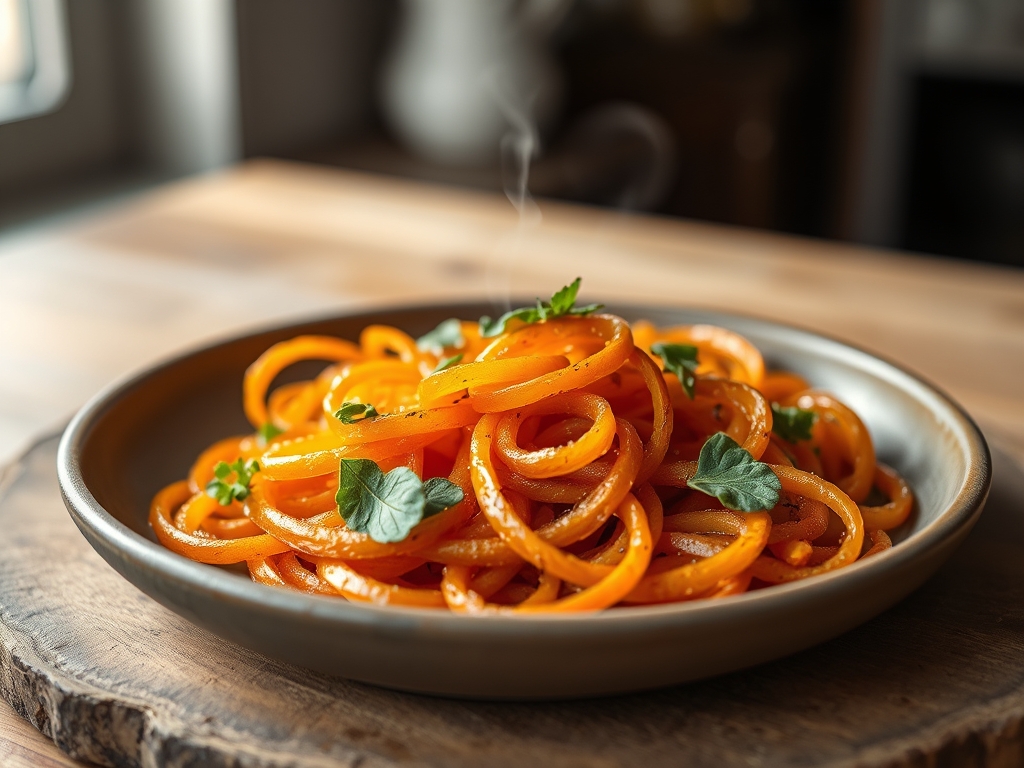
Picture this: a heavy-bottomed skillet shimmering with a thin veil of avocado oil, and you, standing over it with a mountain of vibrant, sunset-orange ribbons. There is a specific, tactile thrill in watching a rigid tuber transform into delicate, springy coils. When you dive into spiralizer sweet potato recipes, you are not just making a side dish; you are re-engineering the structural integrity of a root vegetable to maximize surface area and flavor absorption.
The scent hitting your nose right now is earthy and slightly floral, a precursor to the caramelization that happens when those thin strands meet high heat. Most people treat sweet potatoes like a heavy starch, but we are going to treat them like a delicate pasta. By the time we are done, you will understand how to manipulate starch molecules to achieve that elusive "al dente" bite without the mush. We are moving beyond the basic fry and into the realm of culinary architecture. Grab your apron; we are about to turn your kitchen into a laboratory of flavor.
The Gathers:
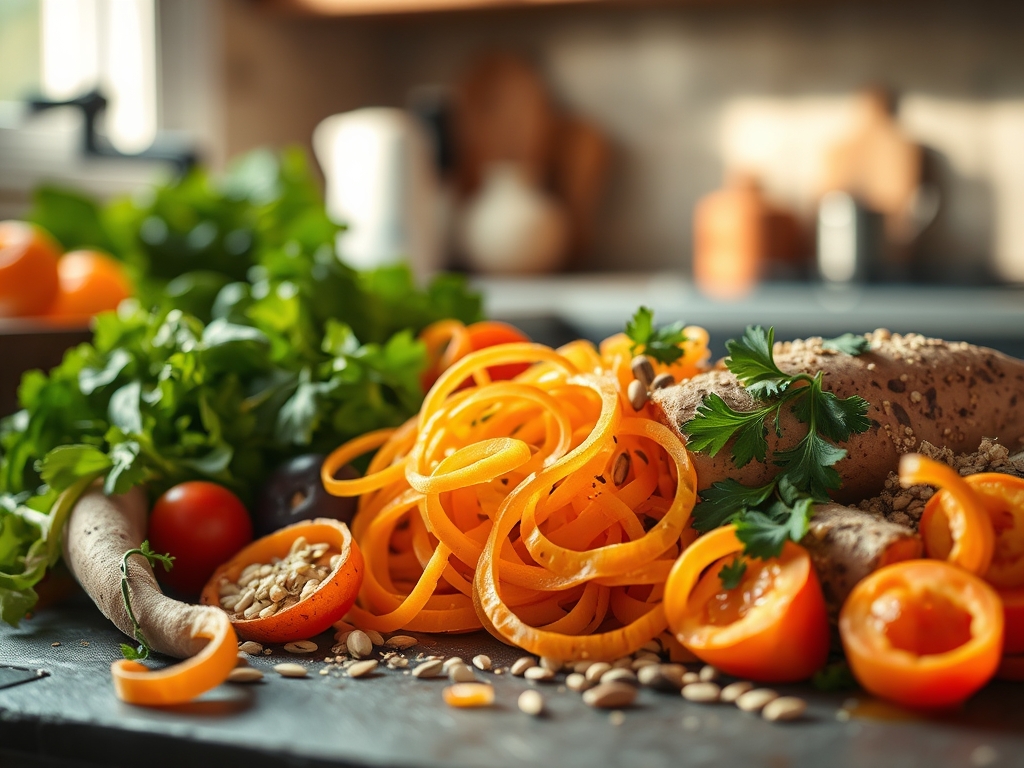
To master these spiralizer sweet potato recipes, your mise-en-place must be precise. Start with two large, firm Beauregard or Jewel sweet potatoes. Look for uniform, cylindrical shapes; bulbous ends are the enemy of a clean spiral. You will need a high-quality fat with a high smoke point, such as ghee or refined coconut oil, to facilitate the Maillard reaction without scorching.
For the piquant elements, gather fresh lime juice, smoked paprika, and Maldon sea salt. The salt is crucial; its pyramid-shaped crystals provide a structural crunch that fine table salt lacks. You will also need a microplane for zesting citrus and a bench scraper to move your mountain of noodles without bruising the delicate cell walls.
Smart Substitutions:
If you find yourself without sweet potatoes, Butternut squash is your best structural ally. It possesses a similar density and sugar content. For a lower-glycemic option, Daikon radish provides a sharp, crisp texture, though it lacks the viscous mouthfeel of a cooked yam. If you are avoiding saturated fats, a cold-pressed grapeseed oil offers a neutral profile that allows the natural sweetness of the tuber to shine.
The Clock: Chef's Flow
Efficiency in the kitchen is about managing thermal energy and timing. Total prep time for these hacks is approximately 15 minutes, mostly dedicated to the mechanical action of the spiralizer and the precision of your knife work. The cook time varies between 5 and 8 minutes depending on the thickness of your blade.
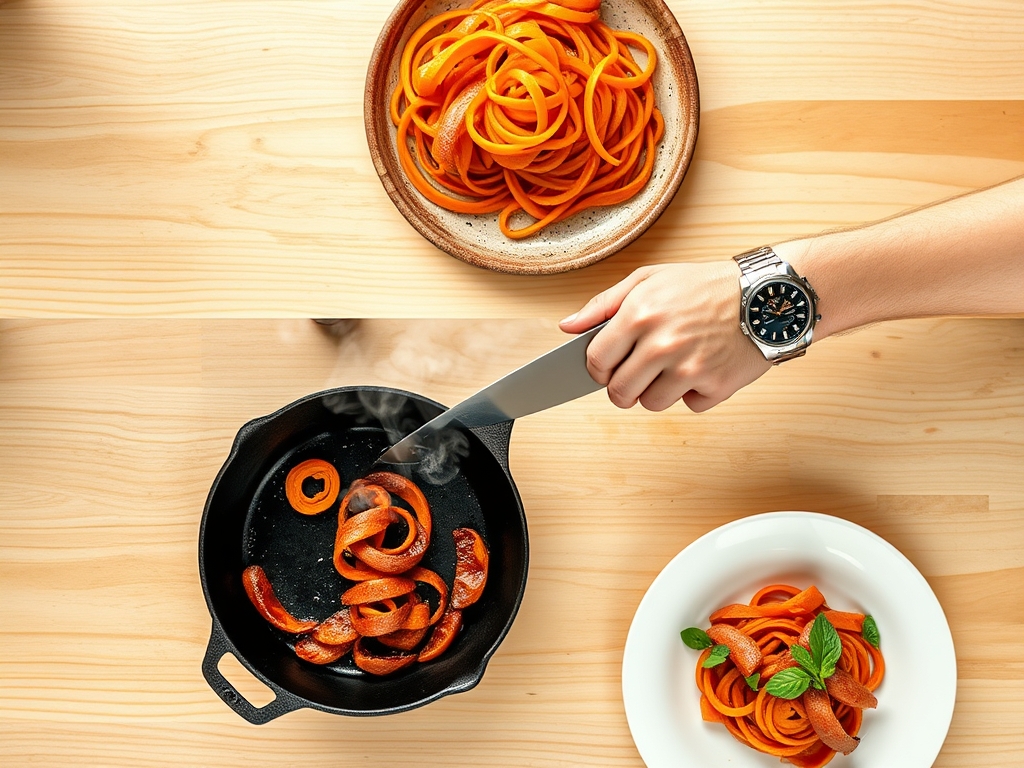
The "Chef's Flow" dictates that you prep your aromatics first. While your heavy-bottomed skillet preheats on medium-high, you spiralize. This prevents the noodles from sitting too long and losing turgor pressure, which leads to weeping. By the time your oil reaches its shimmering point, your noodles are fresh and ready for the pan. Total time from pantry to plate: 25 minutes.
The Masterclass:
1. The Foundation Spiral
Secure your sweet potato onto the prongs of your spiralizer. Use a steady, rhythmic pressure to produce continuous, unbroken strands. If the strands are too long, use kitchen shears to snip them every six inches for easier consumption.
Pro Tip: This mechanical manipulation breaks the plant's cell walls. To prevent enzymatic browning (the oxidation that turns potatoes gray), work quickly or toss the raw strands in a light acidic solution like lemon water.
2. The High-Heat Sear
Heat your skillet until a drop of water flicked onto the surface dances and evaporates instantly. Add your fat, then the noodles. Do not overcrowd the pan. Use stainless steel tongs to lift and rotate the strands, ensuring every surface area contacts the hot metal.
Pro Tip: This step relies on the Maillard reaction. By keeping the pan under-crowded, you allow steam to escape. If you overfill the pan, the noodles will steam in their own moisture, resulting in a limp, soggy texture.
3. The Infusion Phase
Once the noodles show charred edges, add your aromatics. Grate fresh garlic and ginger directly over the pan using a microplane. The fine particles will adhere to the viscous surface of the noodles, creating a flavor crust.
Pro Tip: Adding aromatics too early leads to burnt, bitter compounds. Adding them in the final two minutes allows the heat to infuse the oils without degrading the delicate volatile compounds in the garlic.
4. The Deglaze and Emulsify
Pour a splash of vegetable stock or coconut milk into the pan. Use your tongs to scrape up the browned bits (the fond) from the bottom. Toss the noodles vigorously to coat them in the resulting sauce.
Pro Tip: This is "pan-sauce science." The starches leaching from the sweet potato act as a natural emulsifier, binding the fat and liquid into a glossy, thick coating that clings to the spirals.
5. The Aeration Toss
Remove the pan from the heat and give the noodles one final, high-altitude toss. This introduces air into the mix, which slightly cools the exterior and sets the starch, preventing the noodles from clumping together as they sit.
Pro Tip: Thermal carryover is real. The internal temperature of the noodles will continue to rise by several degrees after leaving the pan. Pulling them off the heat when they are just shy of "perfect" ensures they reach peak texture on the plate.
6. The Acid Balance
Squeeze fresh lime juice over the finished dish and finish with a sprinkle of zest. The citric acid cuts through the richness of the starch and fat, brightening the entire flavor profile.
Pro Tip: Acid interacts with our taste buds to enhance the perception of salt and sugar. It provides a "top note" that balances the deep, earthy "base notes" of the roasted potato.
7. The Textural Garnish
Top with toasted pepitas or crushed peanuts for a necessary crunch. Use a digital scale to ensure your garnish ratios are consistent if you are meal prepping for the week.
Pro Tip: Contrast is the key to a professional dish. The crunch of the seeds provides a sensory counterpoint to the soft, yielding texture of the spiralized potato, making each bite more engaging.
The Deep Dive:
When we look at the macro nutrition of spiralizer sweet potato recipes, we see a powerhouse of complex carbohydrates and Vitamin A. A single serving provides over 400% of your daily recommended intake of beta-carotene. Because we are using healthy fats and whole vegetables, the glycemic load is significantly lower than traditional pasta.
Dietary Swaps:
For a Vegan approach, ensure your fat source is plant-based; avocado oil is superior for its high smoke point. For Keto enthusiasts, swap the sweet potato for zucchini (zoodles), but reduce the cook time to two minutes to prevent water release. For a Gluten-Free guarantee, always check your spices for hidden anti-caking agents that may contain wheat.
The Fix-It:
- Soggy Noodles: You likely salted the potatoes too early. Salt draws out moisture via osmosis. Salt only at the very end.
- Bitter Aftertaste: Your garlic scorched. Next time, add it when the pan is slightly cooler or deglaze immediately after adding.
- Broken Strands: Your potato was too dry or your blade was dull. Use fresh, firm tubers and ensure your spiralizer blades are sharp to slice through the cellulose cleanly.
Meal Prep:
To reheat these and maintain "day-one" quality, avoid the microwave. The microwave agitates water molecules, which turns the starch into a gummy mess. Instead, flash-fry them in a hot skillet for 60 seconds. This re-crisps the edges and restores the original texture.
The Wrap-Up:
You have now mastered the art of the sweet potato spiral. By understanding the chemistry of starch, the importance of surface area, and the power of the Maillard reaction, you have elevated a simple root vegetable into a culinary masterpiece. These spiralizer sweet potato recipes are more than just a healthy alternative; they are a testament to how creative technique can transform the mundane into the extraordinary. Now, go forth and spiralize with confidence. Your dinner guests will thank you, and your palate will never look at a plain potato the same way again.
The Kitchen Table:
How do I prevent spiralized sweet potatoes from getting soggy?
Avoid overcrowding the skillet and do not add salt until the very end of the cooking process. High heat and a heavy-bottomed pan allow moisture to evaporate quickly, ensuring a crisp, al dente texture rather than a steamed, mushy one.
Can I make sweet potato noodles ahead of time?
Yes, you can spiralize them up to three days in advance. Store the raw strands in an airtight container with a damp paper towel to maintain turgor pressure. Do not cook them until you are ready to serve for best results.
What is the best spiralizer for sweet potatoes?
Look for a countertop model with suction feet and stainless steel blades. Because sweet potatoes are dense, handheld spiralizers often struggle. A sturdy crank-style machine provides the necessary leverage to slice through the tough cellulose fibers of the tuber easily.
Are spiralized sweet potatoes healthier than pasta?
Absolutely. They are a whole-food source of complex carbohydrates, fiber, and essential vitamins. They have a lower glycemic index than refined flour pasta, meaning they provide sustained energy without the sharp insulin spikes associated with traditional grain-based noodles.